𝗪𝗵𝘆 𝗥𝗶𝘀𝗸 𝗢𝗳𝘁𝗲𝗻 𝗥𝗲𝗺𝗮𝗶𝗻𝘀
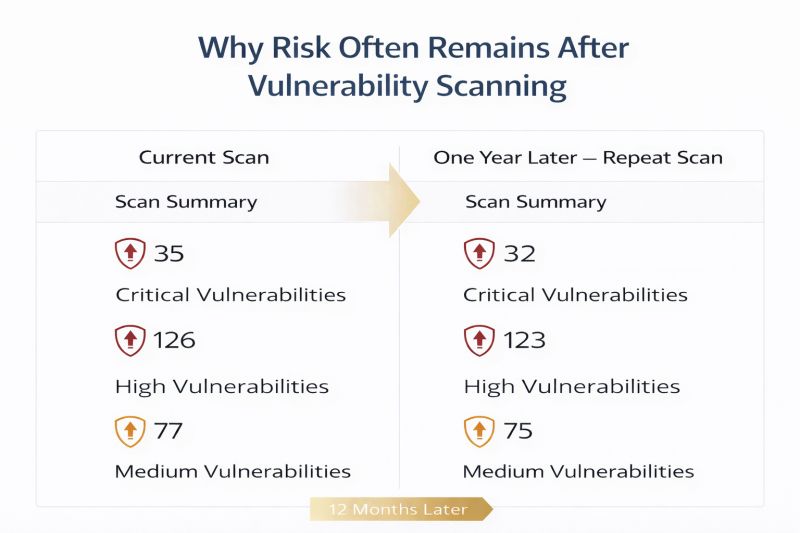
🔍 𝗪𝗵𝘆 𝗥𝗶𝘀𝗸 𝗢𝗳𝘁𝗲𝗻 𝗥𝗲𝗺𝗮𝗶𝗻𝘀 — 𝗘𝘃𝗲𝗻 𝗔𝗳𝘁𝗲𝗿 𝗩𝘂𝗹𝗻𝗲𝗿𝗮𝗯𝗶𝗹𝗶𝘁𝘆 𝗦𝗰𝗮𝗻𝗻𝗶𝗻𝗴
Many organizations run vulnerability scans every year.
Yet when they look back 12 months later, the overall risk level often looks very similar.
The problem is rarely the scanning tool.
It’s what happens after the scan.
In real-world engagements, these are the patterns we see most often:
• Large volumes of findings, but no clear risk-based prioritization
• Patches applied without proper validation
• The same vulnerability patterns reappearing across systems
• Vulnerability management treated as a reporting exercise, not an operational process
Vulnerability scanning is only the starting point.
What actually reduces risk is:
👉 Timely remediation
👉 Verified fixes
👉 Continuous tracking of trends and recurring issues
If vulnerability management stops at “an annual scan”, risk will naturally remain unchanged.
Cybersecurity has never been about whether vulnerabilities exist — it’s about whether they are continuously managed and minimized.
At Ringus, we focus on more than finding issues — we help organizations turn scan results into measurable risk and minimize it.
Further reading