Technical Assessment

A company with core business of real estate, construction, tourism, mining and financial investment which head quarter is located in Hong Kong with multiple sites in Mainland China

Size
500+ Employees

Service
Vulnerability Assessment and Penetration Test

Challenge
Organization is getting more concerns in information security as there is a significant increase in cyber security attack nowadays. However, limited review and regular technical assessment in this organization causes the system and network vulnerabilities have been accumulated throughout the years. Given with this scenario and the scale of the technical assessment which has to be conducted across different sites, our technical specialist and pentesters have to put extra effort in evaluating the security and risk level in order to define the baseline security level and controls that are being implemented in the organization. Furthermore, it is also critical to provide practical recommendation as to resolve the issues identified in this technical assessment. 

Solution
Our certified OSCP, OSWP and GPEN conducted network and web application penetration test to simulate hacker’s activities as to prevent external attack. Internal vulnerabilities assessment is also performed to discover the unmanaged asset. Identify the vulnerabilities with technical tools and manual validation with risk level provided.
 
Result
Our security specialists have issued a penetration test and vulnerabilities assessment report on the security findings with different level of severity. Critical vulnerabilities and system deficiencies are identified such as SQL injection, missing security patches and remote code execution are identified through exploitation and privilege escalation that are putting company asset at risk. Technical recommendations and advisories are provided according to the existing industrial standard. Latest security protection methods and tools were also suggested for future improvement.

The technical assessment report including:
 •    Prioritized list of vulnerabilities
 •    Specific information about the vulnerabilities exploited
 •    The risk level of the vulnerabilities
 •    The description and evidence of the vulnerabilities
 •    Potential impact
 •    Technical recommendations

Follow-up
After our assessment and in-depth analysis of the security testing, Ringus has provided a detailed report documenting each security issue with a set of security recommendations (methods and tools) and corrective action plans. Findings walkthrough session is also conducted to ensure our client understand the issues and able to implement those plans accordingly. Ringus has also provided follow-up services for the remediation works to verify that the remedial activities had been successful.
 
Benefit
Our recommendations have provided our client with an up-to-date defense against known vulnerabilities and global hackers, allowing our client to estimate and justify the cost of equipments whenever appropriate in scaling up its security level, providing a continual improvement model. With our comprehensive report, professional recommendations and direct assistance, our client was able to get a realistic idea on the existing security level of their setup. Our work helped the client avert a potential reputational crisis and allowed the company to operate their systems in a confident and secure way.  

More Updates

Further reading

𝗪𝗵𝘆 𝗣𝗵𝘆𝘀𝗶𝗰𝗮𝗹 𝗦𝗲𝗰𝘂𝗿𝗶𝘁𝘆 𝗥𝗲𝗺𝗮𝗶𝗻𝘀 𝗘𝘀𝘀𝗲𝗻𝘁𝗶𝗮𝗹 𝘁𝗼 𝗜𝗻𝗳𝗼𝗿𝗺𝗮𝘁𝗶𝗼𝗻 𝗦𝗲𝗰𝘂𝗿𝗶𝘁𝘆 𝗶𝗻 𝗜𝗦𝗢 𝟮𝟳𝟬𝟬𝟭

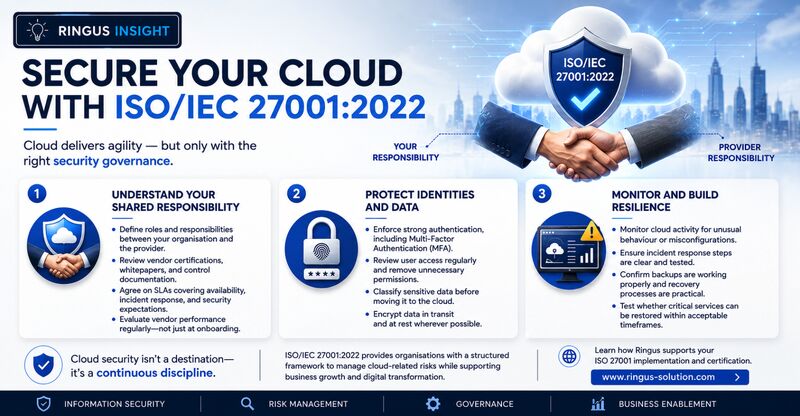
𝗪𝗵𝘆 𝗣𝗵𝘆𝘀𝗶𝗰𝗮𝗹 𝗦𝗲𝗰𝘂𝗿𝗶𝘁𝘆 𝗥𝗲𝗺𝗮𝗶𝗻𝘀 𝗘𝘀𝘀𝗲𝗻𝘁𝗶𝗮𝗹 𝘁𝗼 𝗜𝗻𝗳𝗼𝗿𝗺𝗮𝘁𝗶𝗼𝗻 𝗦𝗲𝗰𝘂𝗿𝗶𝘁𝘆 𝗶𝗻 𝗜𝗦𝗢 𝟮𝟳𝟬𝟬𝟭We spend so much time talking about firewalls, encryption, and phishing simulations — but what happens when someone simply walks into your server room, steals a laptop, and causes damage to company’s assets?Why does physical security matter so much? Because many real incidents start physically:💫 A tailgater slipping into a restricted area and accessing sensitive systems.💫Unlocked desks leaving confidential documents visible to visitors or cleaners.💫Natural disasters such as typhoons and flooding disrupting servers, leading to downtime or hardware damage if environmental protections aren't in place.Physical security directly supports the core principles of information security—the CIA Triad (confidentiality, integrity, and availability) of data and systems. Threats such as theft, tampering, or natural disasters can bypass digital protection entirely.In ISO 27001:2022, physical security is addressed through a dedicated theme under Annex A. Issues like expired fire extinguishers, missing CCTV footage, sticky notes with account passwords, or unlocked server room racks are common findings in an ISO 27001 audit. These are often fixed in a short time but can lead to non-conformities if ignored. Usual physical security practices are as follows:💫 Clear desks and screens (e.g. keep sensitive information in restricted areas)💫Physical entry and access control (e.g. door access restriction)💫Physical Monitoring (e.g. CCTV)💫etc.

𝗛𝗼𝘄 𝗚𝗼𝗼𝗱 𝗔𝗿𝗰𝗵𝗶𝘁𝗲𝗰𝘁𝘂𝗿𝗲 𝗥𝗲𝗱𝘂𝗰𝗲𝘀 𝗧𝗲𝗰𝗵𝗻𝗶𝗰𝗮𝗹 𝗗𝗲𝗯𝘁 𝗶𝗻 𝗦𝗼𝗳𝘁𝘄𝗮𝗿𝗲 𝗣𝗿𝗼𝗷𝗲𝗰𝘁𝘀

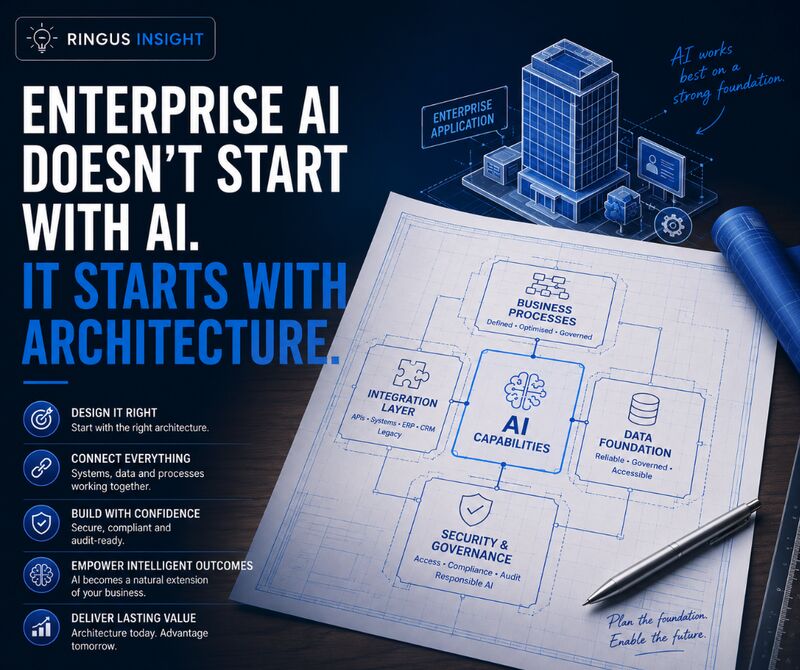
𝗛𝗼𝘄 𝗚𝗼𝗼𝗱 𝗔𝗿𝗰𝗵𝗶𝘁𝗲𝗰𝘁𝘂𝗿𝗲 𝗥𝗲𝗱𝘂𝗰𝗲𝘀 𝗧𝗲𝗰𝗵𝗻𝗶𝗰𝗮𝗹 𝗗𝗲𝗯𝘁 𝗶𝗻 𝗦𝗼𝗳𝘁𝘄𝗮𝗿𝗲 𝗣𝗿𝗼𝗷𝗲𝗰𝘁𝘀Technical debt is often an unavoidable byproduct of rapid development—but good architecture ensures it doesn’t become toxic.1️⃣ Defines Standards and Enforces ComplianceArchitecture sets clear standards for platforms, data, and security, reducing inconsistencies and redundancies. Guidelines and regular architecture reviews ensure new code complies with best practices, preventing unmaintainable implementations from entering the system.2️⃣ Manages Complexity through ModularityModular architecture, such as microservices or well-structured layers, reduces tight coupling and isolates components. This simplifies maintenance, allows teams to work independently, and makes it easier to identify and fix areas of high technical debt before they snowball.3️⃣ Enables Scalability and FlexibilityProactive architectural design anticipates future growth and changing requirements. Systems can scale, adapt to new technologies, and incorporate new functionality without extensive rewrites, minimizing long-term debt and maximizing agility.4️⃣ Improves Maintainability and Reduces RiskClear structure and documentation provide visibility into system dependencies, helping developers understand the impact of changes. Combined with CI/CD pipelines and automated testing, architecture acts as a safety net, allowing incremental improvements while controlling debt accumulation.5️⃣ Aligns Technology with Business GoalsGood architecture ensures systems support business objectives efficiently, balancing speed with quality. It enables sustainable technical choices that maximize ROI while reducing the cost of misaligned or obsolete solutions.In essence: architecture is a strategic investment that turns technical debt from a hidden risk into a manageable, predictable factor—supporting sustainable growth, maintainable code, and long-term innovation.